Tygron Edu-day 2026; Bringing together education, practice, and innovation
Thursday August 27th 2026 | HAS green academy – Den Bosch
Digital twins, GIS, and AI are no longer a thing of the future, but daily practice in education. Educational institutions everywhere are looking for ways to integrate these technologies into the curriculum. Through the education network surrounding Tygron, we share our accumulated experience so that you can immediately benefit from what already works.
The Tygron Edu-day brings together teachers, educational institutions, and researchers to exchange knowledge, skills, experiences, and best practices. Central to the event is the question of how education and practice can reinforce each other regarding societal and spatial issues.
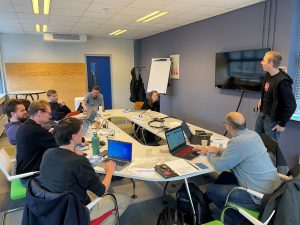
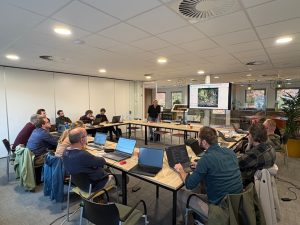
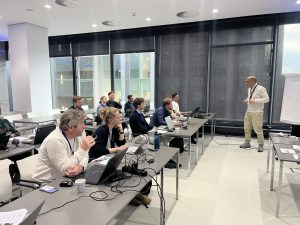
The day consists of an accessible morning program for teachers exploring digital twins and High Performance GIS in education, followed by an in-depth afternoon program. There is ample opportunity for discussion, exchange, and collaboration between teachers who already have experience and those who wish to explore how these developments fit within their teaching.
Program
Morning
10.00 – 12.00 | Mini-workshop Digital Twins & High Performance GIS in education; Erik Dietvorst and Max Visser – HAS green academy
Interactive workshop for teachers who want to explore how digital twins, GIS, and environmental simulations can be integrated into education.
Erik and Max share their experiences from higher education as well as from practice-oriented training programs for professionals at municipalities and provinces. They demonstrate how they provide education around these themes, which teaching methods work well, and which teaching materials are already available and reusable.
Please note: there are a maximum of 20 places available for this morning program. Therefore, please register in good time.
Prior to the afternoon program, Erik Dietvorst and Max Visser are organizing an interactive mini-workshop for lecturers exploring the use of digital twins, GIS, and data-driven education within their curriculum.
Erik and Max are experienced lecturers in the Earth, Data Analysis, and Visualization programs at the HAS green academy. Additionally, they provide education and training for professionals from municipalities and provinces, among others. They share their experiences from both higher education and practice-oriented training programs for professionals.
During this workshop, they will demonstrate how they teach about digital twins and High Performance GIS. In doing so, they will address questions such as:
- How do you integrate these developments into existing education?
- What should you, as a teacher, take into account?
- Which teaching methods work well in practice?
- Which course materials are already available and reusable?
- What works well — and what does not?
Within the Tygron education network, a great deal of experience has already been built up. Not everything needs to be reinvented. By sharing knowledge, teaching materials, and experiences, educational institutions can get started more quickly and easily. This workshop is intended as a practical and accessible introduction for teachers who wish to explore how these developments fit within their teaching.
Subsequently, participants can take part in the afternoon program of the Tygron Edu-day, where experiences are shared by various educational institutions, companies, and students. There will also be ample opportunity to engage in conversation with other teachers who already have experience using Tygron in their teaching.
Afternoon
12:00 – 13:00 | Arrival and lunch. Reception with lunch and an opportunity to get acquainted informally.
13:00 – 13:20 | Opening. Harm Bodewes – Professor of Data Intelligence for Sustainable Transitions, HAS green academy.
Opening welcome and the HAS green academy’s vision on digital twins, collaboration between education and practice, and the role of technology in societal issues.
13:20 – 14:00 | Education in practice. Anouk Berendsen-Sloot (Lecturer in Land and Water Management program at Van Hall Larenstein University of Applied Sciences).
How do you effectively utilize a professional environment like Tygron within higher education? Anouk demonstrates how students in the Water Management and Hydrology programs work on current issues faced by government bodies and water authorities.
During this session, there will be ample opportunity for discussion regarding teaching methods, student supervision, collaboration with external clients, and the added value of realistic case studies within education.
14:00 – 14:30 | Break
14:30 – 15:00 | Collaboration with the business community. Jonathan van Ekris (Advisor Climate adaptation at BOOT Advies).
What do consultancy firms expect from future professionals? Jonathan explains how Tygron is deployed within climate adaptation and water projects and what skills organizations such as BOOT Advies look for in graduates. He also discusses the collaboration between BOOT and Van Hall Larenstein University of Applied Sciences, where guest lectures, practical case studies, and mentorship contribute to a better alignment between education and the labor market.
The session offers insight into how educational institutions and companies can reinforce each other in training professionals who are immediately employable in practice.
15:00 – 15:30 | Learning with Tygron from a student perspective. Tom Hartemink (Student van de Hogeschool Van Hall Larenstein).
What is it like to work during your studies with the same tools used by government agencies, water boards, and consultancy firms? Tom Hartemink shares his experiences with Tygron within educational projects, practical assignments, and collaborations with external clients.
15:30 – 16:00 | Developments from Tygron. Florian Witsenburg – Tygron.
The latest developments within the Tygron Platform, the collaboration with education, and what educational institutions and teachers can expect in the coming period.
16:00 – 17:00 | Drinks. Closing with time to continue the conversation.