Case
Weighting of water interests: building with the water system
Case
Weighting of water interests: building with the water system

Over the next ten years, hundreds of thousands of homes must be built, often in vulnerable water systems. Read how the Vallei and Veluwe Water Board uses Tygron to integrally balance interests around safety, water availability, and spatial development.
Customer
Water Board Vallei and Veluwe
Themes
Spatial Planning
Water
Services
Consultancy

Challenge
Finding new places to build is becoming increasingly challenging
Over the next ten years, approximately 100,000 homes need to be built annually in the Netherlands. More than ten percent of these will be located within the area of the Vallei en Veluwe Water Board. However, finding new sites to build on is becoming increasingly challenging, especially when taking water and soil into account. Under the Environment Act, initiators are required to investigate the consequences of spatial plans for the water system: the weighing of water interests.
Challenge
Finding new places to build is becoming increasingly challenging
Over the next ten years, approximately 100,000 homes need to be built annually in the Netherlands. More than ten percent of these will be located within the area of the Vallei en Veluwe Water Board. However, finding new sites to build on is becoming increasingly challenging, especially when taking water and soil into account. Under the Environment Act, initiators are required to investigate the consequences of spatial plans for the water system: the weighing of water interests.
Approach
Digital Twin as substantiation for design choices
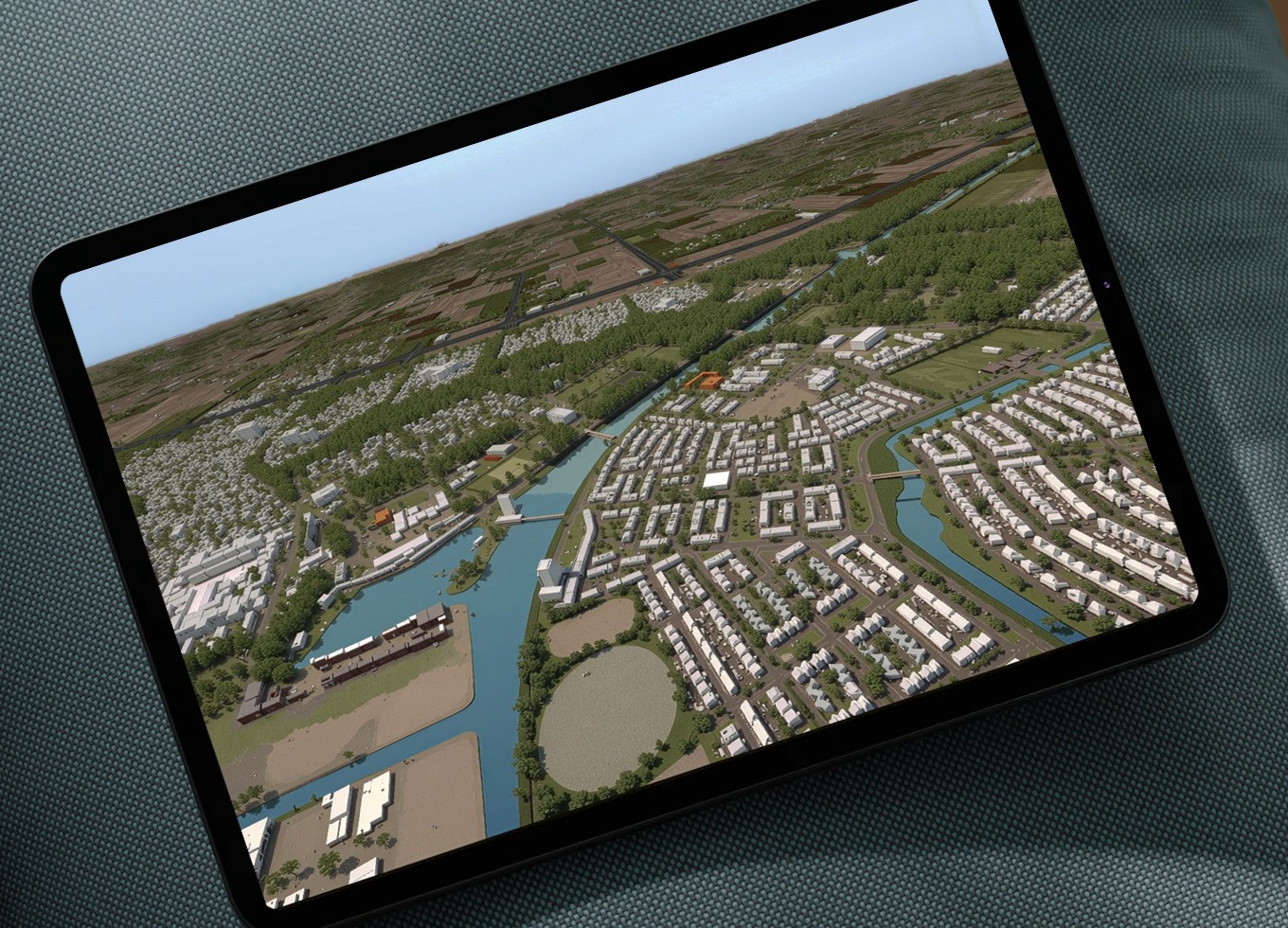
The Vallei en Veluwe water board, together with Tygron, has developed a digital twin that helps authorities make better design choices right from the start. Choices that contribute to retaining and keeping local water clean. The use of the digital twin helps the various parties involved to jointly think about how the water and soil system can guide new housing developments.
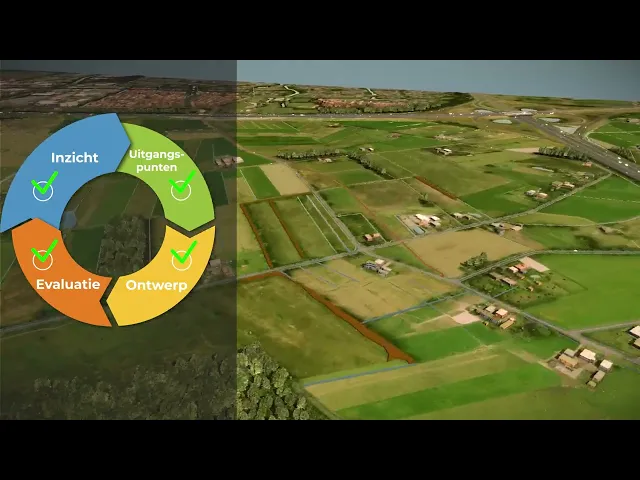
With the digital twin, we bring together the water system, climate scenarios, and design variants. The tool provides insight into the hydrological system, calculates scenarios such as extreme precipitation or changing groundwater levels, and directly shows the impact of design choices. This makes differences between designs clear, and choices are better substantiated and transparently recorded. A shared foundation to make regional development future-proof. This approach is explained in the following video using an example near Apeldoorn:
Approach
Digital Twin as substantiation for design choices
The Vallei en Veluwe water board, together with Tygron, has developed a digital twin that helps authorities make better design choices right from the start. Choices that contribute to retaining and keeping local water clean. The use of the digital twin helps the various parties involved to jointly think about how the water and soil system can guide new housing developments.
With the digital twin, we bring together the water system, climate scenarios, and design variants. The tool provides insight into the hydrological system, calculates scenarios such as extreme precipitation or changing groundwater levels, and directly shows the impact of design choices. This makes differences between designs clear, and choices are better substantiated and transparently recorded. A shared foundation to make regional development future-proof. This approach is explained in the following video using an example near Apeldoorn:
What has been modeled
Area-specific water and soil characteristics
Possible runoff to downstream areas
Effects of outline designs
Result
The water system as the foundation for spatial plans
The tool provides insight into the hydrological system, calculates scenarios such as extreme precipitation or changing groundwater levels, and immediately shows the impact of design choices. In this way, differences between designs become clear and choices are better substantiated and transparently recorded. A shared basis for making area development future-proof. This approach is explained in the following video using an example near Apeldoorn:
Result
The water system as the foundation for spatial plans
The tool provides insight into the hydrological system, calculates scenarios such as extreme precipitation or changing groundwater levels, and immediately shows the impact of design choices. In this way, differences between designs become clear and choices are better substantiated and transparently recorded. A shared basis for making area development future-proof. This approach is explained in the following video using an example near Apeldoorn:
"
"By having the municipality, province, and water board work together from the very beginning – with designers, hydrologists, ecologists, and legal experts at the table – water interests can be factored in at the earliest stage of spatial development. This prevents delays, enhances the quality of plans, and leads to better, integrated solutions for housing, nature, mobility, and climate adaptation."

Water Board Vallei and Veluwe
"
"By having the municipality, province, and water board work together from the very beginning – with designers, hydrologists, ecologists, and legal experts at the table – water interests can be factored in at the earliest stage of spatial development. This prevents delays, enhances the quality of plans, and leads to better, integrated solutions for housing, nature, mobility, and climate adaptation."
Water Board Vallei and Veluwe